To prepare your hotel for the end of the year, align demand forecasting, rates, packages, service, and operational capacity before expanding campaigns. The goal is to sell accommodations that your team can deliver with quality, while tracking revenue and the costs of each decision.
This guide helps hotel managers organize Christmas and New Year’s Eve based on the operation's own history. You will find criteria for adjusting offers, coordinating reservations and reception, and using technology without promising availability or benefits that the hotel cannot guarantee.
Listen to the podcast of this article:
The year-end challenge in hospitality
Prepare your hotel for the demand of your destination, not for a generic expectation of full occupancy. A leisure hotel may receive more families on New Year’s Eve, while a corporate operation may need to compensate for the reduction in business travel.
As a reference for organization, start planning between August and September, advancing it when your reservation history justifies. This is a suggested timeline, not a universal rule. If the period has already begun, prioritize correct availability, pending proposals, schedules, and pre-arrival communication.
Assign a responsible person for each area and a review date. Before announcing a gala dinner, for example, confirm capacity, suppliers, staff, and participation conditions.
Prepare in advance with your hotel's data
Analyze previous performance and compare confirmed reservations for the same dates and with the same lead time. Comparing the current calendar with the final result of the previous year can distort the reading of demand.
- Which days had the highest occupancy rate?
- Which packages sold the most and had the best margin?
- Where did the guests come from and which channels generated reservations?
- When did guests book and how many canceled?
Consult the reports from the PMS, the booking engine, and the channels used by the hotel. Cross-reference this information with confirmed events at the destination and the recent evolution of inquiries.
Also monitor the average daily rate (ADR) and RevPAR. ADR divides accommodation revenue by the rooms sold; RevPAR divides this revenue by the rooms available during the period. The definitions are in the STR Benchmark glossary from CoStar. These indicators help interpret occupancy and price, but do not represent profit.
Dynamic rates and margin packages
Dynamic rates are prices adjusted according to demand, lead time, availability, and the hotel's strategy. The decision can be manual or supported by a system; it does not necessarily depend on automation.
Define criteria for reviewing values by date and accommodation category. Evaluate the pace of reservations, the costs of the stay, and the conditions of comparable offers. Avoid copying the competitor's rate without verifying what it includes.
You can create packages with a New Year’s Eve gala dinner, local experiences, or a minimum stay. Before promoting them, detail:
- Dates, number of nights, and included accommodation.
- Meals, drinks, activities, and services charged separately.
- Conditions for children and companions.
- Payment method and conditions for changes and cancellations.
The goal is perceived value, not just price. Show what the guest is booking. Offer early check-in and late check-out only when the operation can confirm these conditions; on days of intense guest turnover, housekeeping needs time to prepare the rooms.
Channel strategy and direct bookings
Distribute the offer considering the net revenue and the service capacity of each channel. OTAs, such as Booking.com and Expedia, can be part of the strategy; direct bookings also involve costs for promotion, payment, and commercial work.
Bet on your own campaigns via social media, email, and WhatsApp, with offers compatible with the hotel's audience. Before granting a discount or courtesy, calculate its cost and the remaining margin. There is no adequate discount percentage for every operation.
Keep dates, rates, and conditions consistent between the announcement, proposal, and confirmation. Record who follows each budget and when the contact should be resumed. The guide on budget follow-up to recover reservations delves into this commercial organization.
Omnichannel service with context
Omnichannel service organizes the continuity of the conversation across the channels used by the hotel. To work, the team needs to know the request, the proposal sent, and the next step, even when the attendant changes.
Define responsible persons for the queues, transfer procedures, and reviewed responses to questions about packages, schedules, and payments. A quote should inform dates, guests, category, inclusions, and validity. Before confirming the reservation, check availability and payment in the flow adopted by the hotel.
The official page of omnichannel service from DeskHotel describes WhatsApp, Instagram, email, and web chat, as well as queues and context transfer. Verify the applicable channels and integrations for your operation; centralizing conversations does not replace the verification of the accommodation inventory.
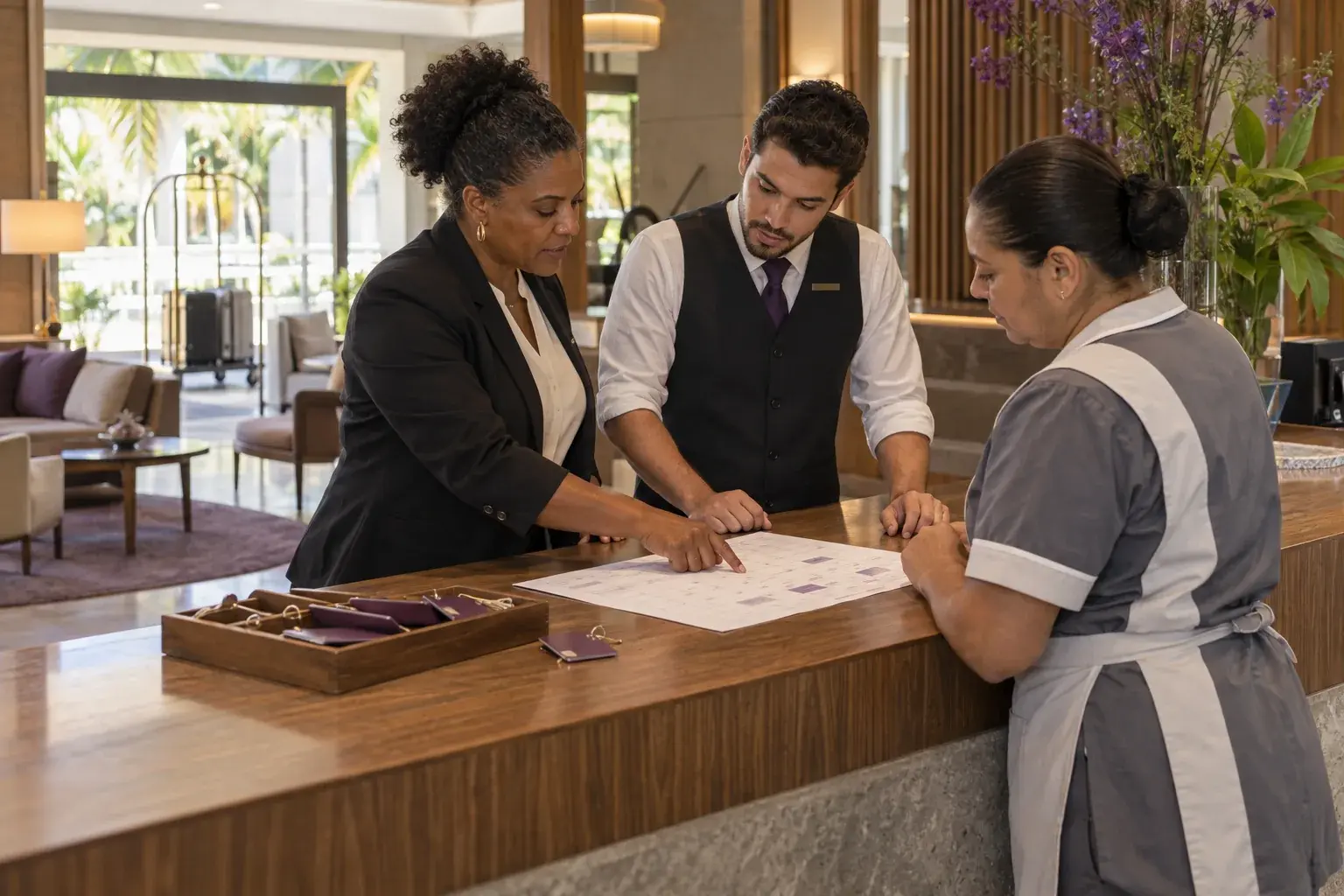
Prepare the team for the high season
The best marketing strategy won’t work if the operation is stuck. Therefore, preparing your team is as important as defining packages or rates.
- Pre-training: simulate questions about the gala dinner, date changes, payments, and complaints before the peak.
- Scheduling planning: map arrivals, departures, and events to distribute the workload.
- Contingency: define who to activate in case of absence, maintenance, or system unavailability.
- Clear routine: document responsibilities and the handover of information between shifts.
Connect reservations, reception, housekeeping, and food and beverage. An order registered in the conversation needs to reach the person who can handle it. Use the check-in and check-out checklist to adapt the reviews to your operation.
New Year’s Eve, gala dinners, and services beyond the room rate
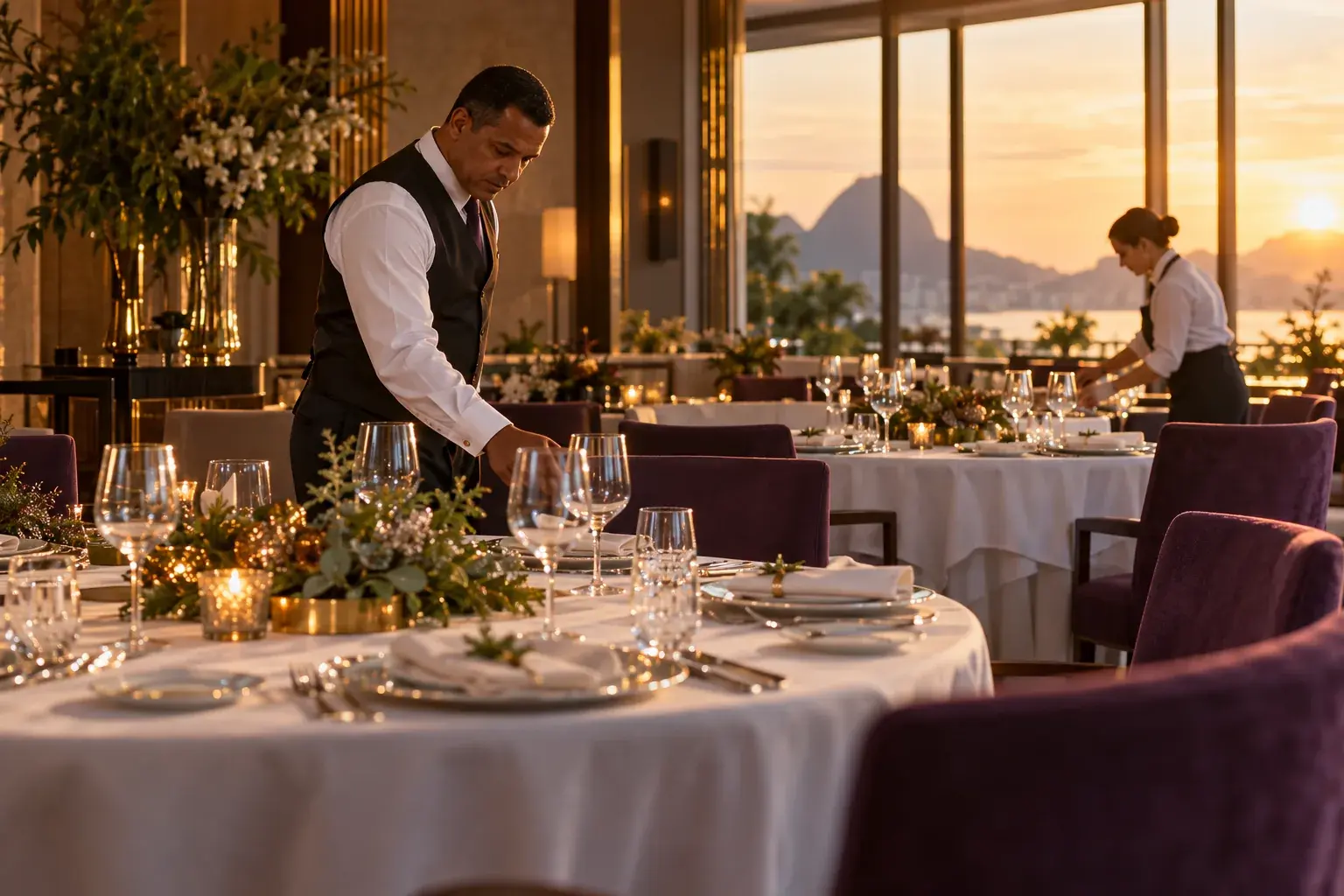
Additional events and services can complement revenue when they have demand, margin, and execution capacity. Evaluate New Year’s Eve gala dinners, Christmas brunches, corporate gatherings, or wellness experiences according to the hotel's structure.
Calculate supplier costs, setup, food, staff, and any complimentary items. Also define whether the event receives external guests and how this affects parking, circulation, and guest service.
Communicate the differentiators in advance to the contact base that can receive your campaigns. Segment by interest and relationship history, avoiding sending the same offer indiscriminately. Do not announce activities or services that are not yet confirmed.
AI and automations to support the team
Automate repetitive tasks with reviewed information and a clear path to human service. Prioritize frequent questions, proposal follow-ups, and pre-arrival instructions.
According to the official page of AI Copilot from DeskHotel, the platform offers response suggestions, audio transcription, and a chatbot based on the hotel's data. Review the knowledge base before promoting seasonal packages.
The automations and workflows module describes message sending actions and task creation, with conditions and response verification. Test the flows to stop inappropriate reminders when the reservation is confirmed or the guest responds.
Exceptional benefits, availability, and commercial conditions should follow the rules approved by the hotel. Technology supports the team; the result depends on the data, configuration, and execution.
Checklist to organize the end of the year
- Review history, confirmed reservations, and demand by date.
- Define packages, costs, and commercial conditions.
- Verify availability and information in the sales channels.
- Assign responsible persons to pending budgets.
- Plan schedules and train critical situations.
- Confirm suppliers, events, and service capacity.
- Review messages and test automations.
- Send pre-arrival instructions and monitor occurrences.
Share the list with the team and monitor execution. Preparing your hotel for the end of the year requires adjusting sales to what the operation can deliver and correcting deviations during the period.
If the main bottleneck is in conversations and budgets without follow-up, evaluate with DeskHotel how to organize the queues and the continuity of service before the peak of reservations.
Frequently asked questions about hotels at the end of the year
When to start planning for Christmas and New Year’s Eve?
Use the lead time of your hotel's reservations as a reference. August and September are a suggested start; operations that sell earlier need to advance planning. If it is already close to the holidays, focus on bottlenecks that affect reservations and service.
Is it necessary to increase all rates?
No. Review prices by date, category, demand, and margin. A date with few inquiries may require a different strategy from New Year’s Eve night. Preserve the conditions of already confirmed reservations.
How to define the minimum stay of a package?
Compare the demand pattern with the nights that may remain unsold between reservations. Test the effect of the restriction on inquiries and the expected revenue, without adopting the same duration for all dates.
How to reduce the risk of overbooking?
Verify the inventory, blocks, and availability updates between the systems and channels used. Define a procedure for discrepancies. Centralizing service alone does not control the number of rooms sold.
Is it worth offering a free gala dinner and late check-out?
Only after evaluating costs and capacity. The gala dinner must fit within the package margin; the late check-out depends on the cleaning schedule and the next arrivals. Clearly inform when a benefit is subject to confirmation.
How to measure if the planning worked?
Compare occupancy, average daily rate, revenue, costs, cancellations, and occurrences with the defined goals. Also evaluate converted proposals and service issues. A full hotel, by itself, does not prove profitability.